Why Silent Margin Leakage is a Bigger Threat than Theft
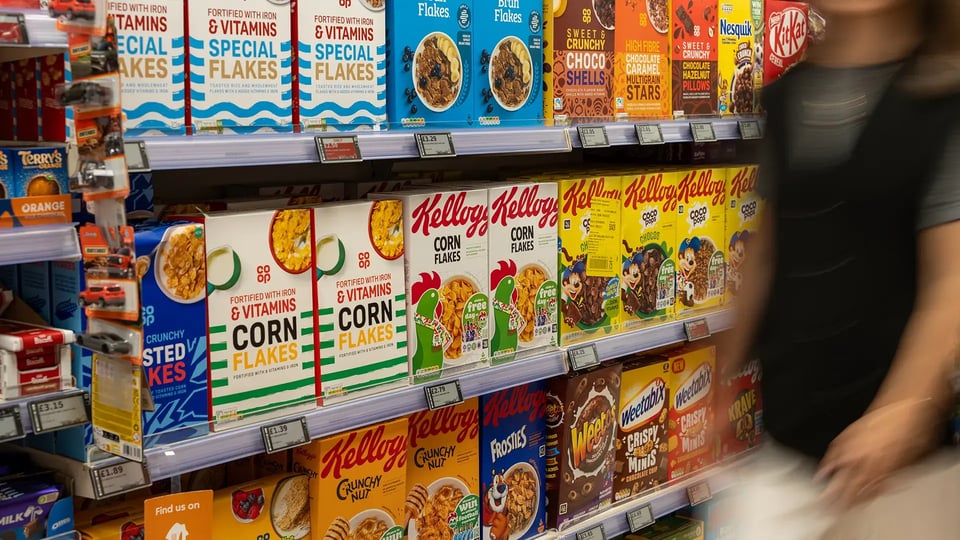
Retailers have traditionally focused on shrink as the biggest threat to profitability, but some of the most damaging margin losses occur through pricing errors, poor promotional execution and unintended substitution. Finn Wikander, chief product officer at Pricer, argues that retailers need to think beyond stock loss and start addressing execution shrink, the hidden margin leakage that occurs when commercial strategies fail at the shelf edge.
Theft, organized retail crime, and stock loss understandably attract attention because they are visible, measurable, and frequently make headlines, yet some of the most significant threats to profitability occur in plain sight and often go unnoticed. For instance, mispriced products, incorrect promotions, shelf execution failures, product substitutions or pricing discrepancies between systems and stores.
Unlike theft, customers rarely complain about these issues. In many cases they simply make a different purchase, choose a competitor or abandon the transaction altogether. The result is silent margin leakage or execution gaps that individually appear insignificant but collectively erode profitability.
As retailers face growing pressure from inflation, labor costs and increasingly cautious consumers, these hidden losses are becoming impossible to ignore. Protecting margin is about preventing stock loss but it is also about ensuring that every shelf, every promotion and every price point is executed exactly as intended.
What is the best way to ensure pricing accuracy for customer trust?
The answer is what we call shelf-edge precision. Pricing accuracy was once solely an operational concern. Retailers needed shelf labels to match checkout systems to avoid customer dissatisfaction and regulatory issues, so Electronic Shelf Labels (ESLs) were often justified through labor savings and operational efficiency. Those benefits remain important, but today, pricing accuracy is increasingly becoming a commercial discipline.
Consider a typical promotional campaign. A retailer invests heavily in supplier funding, marketing activity, digital advertising and promotional planning. The objective is to drive demand while protecting margin through carefully calculated pricing strategies, yet if the promotion is not executed correctly at the shelf edge, the economics begin to unravel.
A promotional label may not be updated, a discount may remain active after the campaign ends, a product may display an incorrect price, or a substitute item may be selected because the intended product is unavailable or poorly presented. Each individual issue is relatively minor, but across hundreds of stores and thousands of products, the impact becomes substantial.
The problem then compounds because retailers are managing more products, more channels, more promotions and more dynamic pricing decisions than ever before. Moreover, promotional cycles have accelerated, consumer demand changes rapidly, and competitive price matching responses can occur within hours rather than weeks.
At the same time, retailers are increasingly seeking to optimize pricing based on local conditions, inventory levels, competitor activity and customer demand. The good news is that these strategies each create opportunities for margin improvement, but they also increase the risk of execution gaps. Every manual process introduces potential inconsistency, every delay between a pricing decision and shelf implementation creates risk and every discrepancy between systems and stores creates an opportunity for margin leakage.
This is why leading retailers are beginning to view shelf-edge execution differently. The shelf edge is where the pricing strategy becomes commercial reality and is effectively the transmission system that delivers profitability to the store floor. Electronic Shelf Labels play a critical role in this process in ensuring those strategies are executed with precision.
How can retailers improve operational efficiency and streamline inventory management?
By synchronizing pricing decisions directly with the shelf edge, retailers can significantly reduce execution errors, improve promotional compliance and ensure greater consistency across stores. Price changes that once required extensive manual intervention can be implemented rapidly and accurately across entire store networks.
This is particularly valuable as retailers move towards more dynamic approaches to pricing and promotion. Whether responding to competitor activity, managing inventory, reducing waste, or supporting time-sensitive offers, retailers need confidence that every change is reflected accurately at the shelf level.
Importantly, shelf-edge precision also influences customer behavior. When product information is accurate, promotions are clearly communicated and prices are consistently displayed, shoppers can make decisions more confidently. This reduces confusion, improves trust and increases the likelihood that customers purchase the products retailers intend them to buy.
But the opposite is also true. Pricing inaccuracies, missing promotional information, or poor execution often drive unintended substitution behavior. Customers switch products, defer purchases or seek alternatives elsewhere. These decisions do not show up in traditional shrink reporting but they can have a direct impact on profitability.
As retail becomes more data-driven and margins come under increasing pressure, the definition of shrink itself may need to evolve. Retailers must also consider the hidden costs of execution failure, pricing inconsistency, and unintended substitution in order to protect profitability, improve execution, and ensure that the commercial decisions made in head office are realized accurately on the shop floor.
Do you want to learn more about how you, as a retailer, can solve these challenges? Feel free to reach out to one of our experts.
This article was originally published in Retail Times on July 3, 2026.