How ESLs are Turning Stores into Waste Reduction Engines
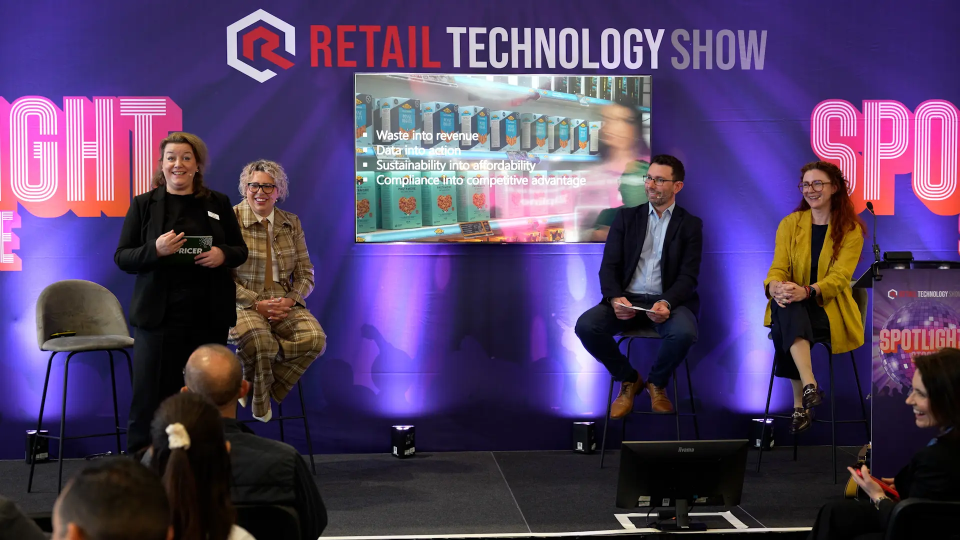
At this year’s Retail Technology Show in London, a session on April 22 hosted by Pricer brought together a compelling mix of retail, technology and sustainability leaders to tackle a growing priority, how stores can actively reduce food waste. You can watch the video recording of the stage presentation at the end of this blog post.
Featuring Sofie Wikander, Head of Sustainability for Pricer, Rob Smith, Technology Officer for East of England Co-op, Gemma Edlin, Head of Retail, Company Shop and Alex Considine Tong, Chief Product Officer, Retail Insight, the discussion made it clear that the store shelf is an intelligent, data-driven engine for waste reduction.
Sofie Wikander set the tone, arguing that retailers need to rethink the role of the shelf entirely. Rather than simply presenting products, it should function as a waste reduction engine. And this needs to happen across the business.
As Rob Smith pointed out, food waste is not just created at the point of expiry but is the result of upstream issues such as late deliveries, poor stock rotation and disconnected systems. A strategy might look perfect on paper; it’s the quality and timeliness of data that determines whether waste is actually reduced in practice.
East of England Co-op has built its approach around how stores really operate. Read more about how they scale efficiency and save £1M annually in this customer case study.
The result is a model that doesn’t just reduce waste but visibly demonstrates responsibility to the local community, an increasingly important factor in building trust.
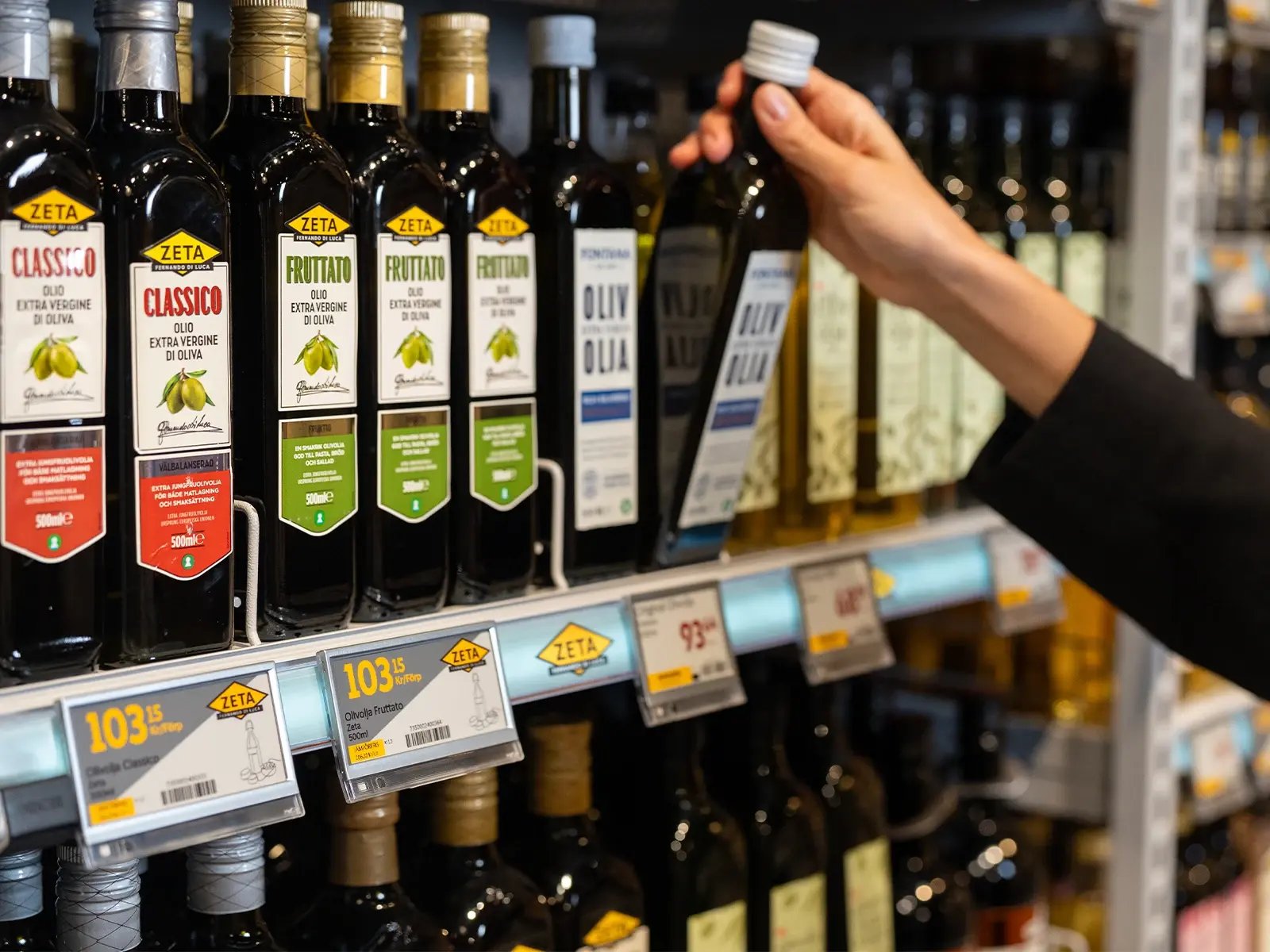
For Gemma Edlin, the role of Electronic Shelf Labels (ESLs) is straightforward, they are now essential infrastructure. At Company Shop, ESLs enable rapid intervention on surplus and near-expiry stock through dynamic pricing.
Instead of relying on manual markdowns, often delayed or inconsistently applied, pricing can be adjusted instantly, ensuring products are sold before they become waste. The impact is tangible. Company Shop reports saving 47,000 tonnes of food waste since implementing ESL-led processes.
But the benefits are more than operational, customers respond positively when value is clear and visible. Flash labels, colour-coded pricing and real time updates help shoppers quickly identify bargains, reinforcing the perception of fairness and transparency.
Complementing ESLs with AI
While ESLs provide the execution layer, artificial intelligence is what makes the system truly powerful. Alex Considine Tong showed how retailers are moving from reactive markdowns to predictive, precision-led decision making. Using machine learning models, retailers can now determine the perfect price to maximise sell-through before products reach expiry. This means that waste can be anticipated and prevented.
At the same time, predictive analytics enables better labour planning. If retailers know when and where waste risk will occur, they can allocate staff more effectively, reducing friction in store and ensuring interventions happen at the right moment.
Despite the promise, execution remains the biggest challenge. Rob Smith highlighted the complexity of integrating systems across point of sale, pricing, shelf labels and operational processes. For ESL-fronted strategies to work, they must operate seamlessly across the entire store environment, and critically, they must be low friction for staff.
Alex added that AI models must be trained on the specific ways each retailer operates. Generic models won’t deliver meaningful results. Governance is also key; retailers must be able to explain why decisions are made, both to meet regulatory requirements and to build internal confidence.
Pricing is built on transparency and trust
A recurring theme throughout the session was trust. Consumers are already becoming more conscious about waste in their own homes. As Alex noted, they increasingly expect retailers to behave the same way. This raises the bar for transparency; shoppers want to understand pricing decisions and feel confident that offers are fair.
There is also a broader education challenge. Confusion around “best before” and “use by” dates continues to drive unnecessary waste. As Alex pointed out, “best before” relates to quality, while “use by” is about safety, but many consumers don’t understand the distinction.
Retailers and manufacturers therefore have an opportunity, and arguably a responsibility, to communicate this more clearly. Company Shop has gone further by actively encouraging behaviour change, normalising the purchase of near-expiry food and reframing it as a smart, sustainable choice.
Combining ESLs with predictive analytics
The most advanced retailers are now extending these capabilities beyond the store.
East of England Co-op emphasised the importance of managing waste across the entire supply chain, not just at the shelf edge. By combining ESLs with predictive analytics, they have already saved the equivalent of eight million meals, powerful proof of what is possible when systems, data and operations align.
What emerged from this session is a clear evolution in retail thinking. The shelf is becoming a control layer where data, pricing and customer interaction converge in real time.
And when ESLs are integrated with predictive analytics and AI, retailers gain the ability to act with precision, to adjust prices, influence behaviour and reduce waste before it happens.
Watch the full stage presentation on how stores can actively reduce food waste in the video below 👇
Do you want to learn more about solutions for a more sustainable retail? Contact us today and we will help you out!